
How Arrest Warrants Work in Chambers County
An arrest warrant in Chambers County is a judge's order to take a person into custody and bring them before the court. Alabama Rule of Criminal Procedure 3.1 allows one after an indictment. A probable-cause finding under Rule 2.4 also opens the door. Probable cause means enough facts for a Chambers County judge or magistrate to believe two things. An offense occurred. The named person committed it. Officers gather the material. They do not make that call. Chambers County law enforcement writes an incident report and may enter a warrant request, but the judicial decision stays with the court. For the full local process, the Chambers County Magistrates & Warrants page is the best stop. It covers incidents reported to the Sheriff. It also covers municipal incidents handled by police in LaFayette, Lanett, and Valley. The Chambers County Circuit Court takes general-jurisdiction criminal proceedings, while District Court handles local criminal and preliminary matters. The Circuit Clerk keeps records for both divisions and supports the county magistrate process.
Chambers County Arrest Warrant Timeline
Every Chambers County case starts with an offense report. A complainant reports the incident to the Chambers County Sheriff. Inside a municipality, they go to that city's police department instead. The person tells the officer or deputy they want to proceed. Chambers County law enforcement then enters the request into the warrant system. Only after that does the person see a magistrate, through the Circuit Clerk's courthouse office or the Lanett annex.
- The Chambers County Sheriff or city police take the originating incident report and enter the warrant request.
- The complainant meets the magistrate, takes an oath, and answers questions about probable cause.
- The complainant signs the complaint and deposition supporting the request.
- The magistrate independently issues or denies the arrest warrant. Chambers County says this initiation process has no cost.
This sequence is a case-start description, not an online warrant search. Someone checking their own Chambers County warrant status follows a separate, controlled inquiry route.
Arrest Warrants: What They Contain
Chambers County posts no public arrest-warrant roster. No sample entry appears either. The field list here therefore comes from Alabama's official warrant and complaint forms. Those forms show the legal parts of a warrant. They do not promise each item shows up in an online result. The official criminal-procedure forms appendix holds the complaint, warrant, and recall forms behind that structure.
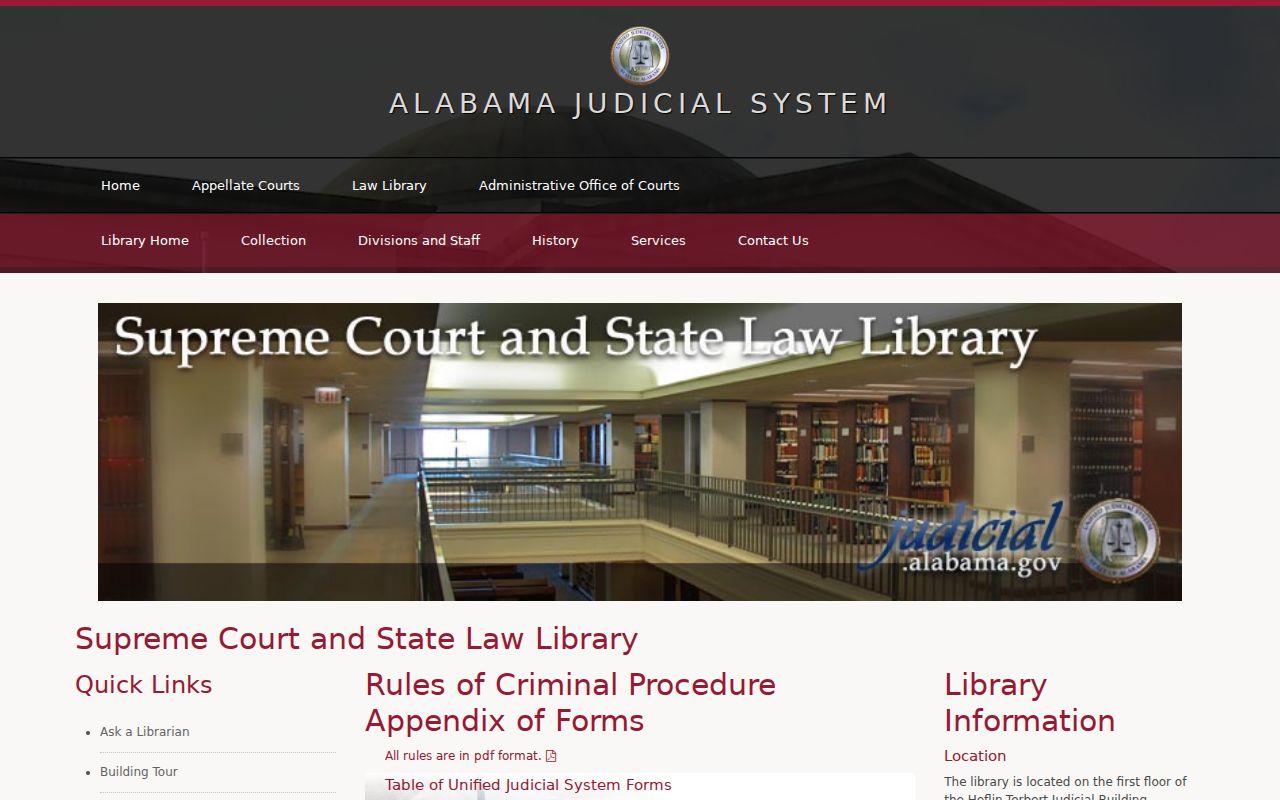
That page is a forms index, not anyone's case. A Chambers County warrant shows the court, the county, the officer's command, the charge, the sworn basis, the issuing signature and date, and the officer's return.
| Court and county | State of Alabama, Chambers County, and the issuing District Court context. |
|---|---|
| Command | An instruction to a lawful officer to arrest and bring the person before court. |
| Charge | The allegation or statutory charge stated in the official record. |
| Sworn basis | The complaint, deposition, affidavit, or testimony reviewed for probable cause. |
| Issue and return | The issuing signature and date, followed by execution or return information. |
Chambers County Magistrate Review
Magistrates sit in the judicial branch. In Chambers County, the role is independent of the Sheriff and of city police. At the sworn meeting, the magistrate may ask whatever questions are needed to decide whether probable cause exists. A request is not approved just because an officer entered it. A warrant issues only after the required court finding, or after an indictment supplies the legal basis.
- Probable cause
- Facts that support a reasonable belief that an offense occurred and the named person committed it.
- Complaint
- A sworn charging document used to begin the criminal process.
- Deposition or affidavit
- A sworn statement that supplies facts for the warrant request.
- Magistrate
- A judicial officer who reviews the request and decides whether to issue or deny it.
The county warns that a complainant cannot simply drop an issued warrant by changing their mind. Once the Chambers County magistrate signs the order, decisions about the case belong to the judicial process.
How Warrants Get Served in Chambers County
An arrest warrant directs an authorized law-enforcement officer to arrest the named person and bring them before the court. In Chambers County, official sources name two local enforcement channels. The Sheriff's Office serves county cases. Municipal police departments serve their own cities. Alabama Rule of Criminal Procedure 3.4 governs execution and return. The county publishes no rule tying each class of warrant to a named officer. There is no service timetable. No public status feed exists. Serving a warrant and reading the record are also not the same act. The Chambers County magistrate page states an arrest warrant is not public until served. After service, the officer's return can join the court record under the usual access rules. Before then, a blank result in Just One Look, the Sheriff's app, or a search engine proves nothing about a Chambers County arrest warrant.
Note: The Sheriff's mobile app carries a curated most-wanted feature, but the county does not describe it as a full arrest-warrant search.
Chambers County Arrest Warrant Roles
Each office in Chambers County plays a different part once an arrest warrant exists. Calling the wrong one can slow you down. The Chambers County Sheriff's Office and city police take incident reports and serve orders, while the magistrate weighs probable cause. Questions about a case itself go to the Circuit Clerk, who keeps the court records. The detention facility takes custody after an arrest. It posts no warrant desk or bond-window protocol on its page, so treat it as a custody contact only.
| Office | Verified Role | Limit |
|---|---|---|
| Sheriff or city police | Reports, service, and in-person suspected-warrant inquiry | Not the court that recalls the warrant |
| Magistrate | Sworn probable-cause review and issue-or-deny decision | Not part of law enforcement |
| Circuit Clerk | Circuit and District court record and case routing | Cannot give legal advice |
| Detention facility | Custody for county and municipal arrests | No published warrant search or bond schedule |
For that custody role, the official Chambers County Detention Facility page lists the facility's limited contact details.

That page covers custody, not warrant status or how to surrender. The address is 105 Alabama Avenue West, LaFayette, AL 36862, and the phone is (334) 864-4336.
Arrest Warrants, Summonses, and Bench Warrants
Rule 3.1 splits an arrest warrant from a summons. A summons fits when the charge is bailable and the judicial officer expects the person to appear. That trust can fail. If the summoned person misses court, seems unlikely to appear, or cannot be served, Rule 3.1(c) allows a writ of arrest. People call that later writ a bench warrant. Chambers County courts treat it the same way.
| Process | Why It Starts | Immediate Effect |
|---|---|---|
| Arrest warrant | Indictment or judicial probable-cause finding | Commands an officer to make an arrest |
| Summons | Court directs appearance when Rule 3.1 permits | Requires appearance without initial custodial arrest |
| Bench warrant or writ | Specified nonappearance or failed summons service | Authorizes arrest so the existing case can proceed |
Each Chambers County record needs its own status check. A summons is not proof of a warrant, and a later payment or appearance does not prove a warrant was recalled.
Chambers County Unserved Warrant Checks
Suspect an unserved Chambers County arrest warrant? The official local instruction says appear in person, either at the Sheriff's Department or at the police department handling the matter in LaFayette, Lanett, or Valley. Where the incident started decides which door. Lanett Police sits at 401 North Lanier Avenue and publishes (334) 644-2146. Valley Police works from the City Hall Complex at 20 Fob James Drive and lists (334) 756-5200 for non-emergency calls. No online shortcut replaces this check.
- Gather your full name, date of birth, any case number, approximate incident date, and the agency involved.
- Use the agency named by the magistrate instructions for an in-person personal-status inquiry.
- For a known case, call the Circuit Clerk at (334) 864-4348 and ask which court owns the record.
- Seek legal advice before any voluntary custodial appearance and follow the court's instructions for resolution.
Just One Look is paid, case-by-case access. It may show a trial-court record when one is available, but it is not a statewide active-warrant roster and cannot override the Chambers County rule for unserved warrants.
Handling an Arrest Warrant in Your Name
Once you confirm a warrant, build a safe plan. Ask the issuing court or the Circuit Clerk through the official directory for the case number, the current order, the next setting, and any bond or appearance instructions staff can share. A clerk gives record and procedure information only. That office cannot advise you how to defend the case. A criminal-defense lawyer can judge whether to seek court direction, arrange an appearance, or prepare a surrender. Chambers County defendants should take that step early.
- Confirm the warrant through the official in-person route and identify the issuing court.
- Ask the court about the current order, required appearance, and case-specific release conditions.
- Consult counsel before going to the courthouse or detention facility for a custodial action.
- After the directed step, verify the warrant record with the issuing court or Circuit Clerk.
Act promptly: Do not rely on an app result or attempt an unplanned surrender. Confirm the Chambers County arrest warrant and get court or attorney direction.
No official Chambers County source posts a universal bond amount, bond type, payment window, same-day release promise, or walk-in surrender checklist. Confirm any bond already set in that specific case.
Chambers County Arrest Warrant Limits
Warrant records can be incomplete for lawful reasons. Under the local instruction, unserved arrest warrants stay out of public view. So do sealed records and juvenile records. Alabama court rules keep other confidential material restricted too. You may request an eligible served return or docket paper from the right office, but the Alabama Open Records Law does not erase those Chambers County limits.
Verified field limit: No public Chambers roster confirms bond, online status, photo, date of birth, physical description, holding agency, or update time.
The Alabama Rules of Court-Record Privacy and Confidentiality set the access framework. Use the originating Chambers County court or Circuit Clerk. Put requests in writing. Name the precise eligible record, the case or citation number if known, the date range, and the copy type you want. No local warrant-request fee or response schedule exists.
Note: Clearing or serving an arrest warrant does not decide the underlying charge; the related Chambers County court case still proceeds.